
Elements of Staying on a Placeboard
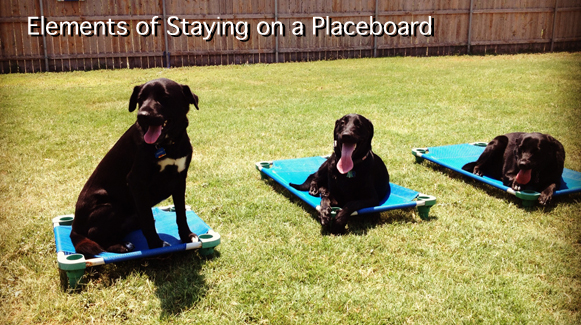
Teaching your dog to place is truly one of the most valuable things your dog can learn. In it’s simplest definition, place means to put four paws on something different from the ground and remain there. Not only does it help to mentally calm them down and teach them to relax, but it also keeps them in one place for an extended period of time.
With that being said, the skill of place has to be fully taught and proofed before it becomes a functional skill. While in the teaching phase it’s most likely that your dog will be breaking off of their placeboard for 3 main reasons. In order to overcome this, it’s important to recognize the reason for your dog breaking early so that you can work to overcome that issue.
Distance – Most dogs can easily stay on their boards while the owner is standing right next to them. However initially when the handler starts to increase the distance from their dog, many dogs will break. When adding distance into your dog’s placing skills, start off with just a few steps and slowing increase distance at a level where your dog will still be successful.
Duration – Similar to distance, having your dog remain on a place for a few seconds is easy but as soon as you start extending the amount of time on a place, many dogs will break. As with many aspects of training, it’s important to go slow and set your dog up for success by always breaking them before they decide to break themselves. What I mean by this is I would rather have a dog successfully stay on a place for 1 minute 100% of the time then have the dog break themselves at the 5 minute mark 75% of the time. Duration will come but start out slow.
Distraction – There are so many elements that fall into the distraction category; everything from approaching dogs, bouncing balls, smells, humans arriving and departing, doorbells, etc. Overcoming distractions when working with place is HUGE, distance and duration are pointless unless they can remain steady in spite of distraction.
Regardless of the reason for your dog breaking off of their placeboard, watch for the first sign of movement and use that as your point of interruption in attempts of keeping your dog from fully breaking their place.
If you enjoyed this entry, don’t forget to subscribe to our dog training blog. You will be automatically notified as soon a new entry is made. Also be sure to check out our Facebook Fan Page and follow us on Twitter.


